Operational Performance Improvement: Problems We Solve
Value Chain Strategy & Execution Focused PMO
Aftermarket Parts Distribution Network Redesign
Value Chain Strategy & Execution Focused PMO

Improvement efforts across supply chain management, ecommerce, B2B channels, service, and supplier operations were not shifting service, cost, or availability outcomes. A value chain strategy was developed through a diagnostic that mapped customer touchpoints and critical operational processes to identify structural constraints and value leakage. This enterprise value chain strategy was supported by a prioritised program roadmap, clear investment cases, and a structured PMO to govern delivery, alignment, and cross-functional decision rights. This created a unified direction and disciplined execution model, which in turn improved DIFOT and customer experience, reduced cost-to-serve, strengthened supplier and service-team integration, and enabled sustained performance uplift across the end-to-end value chain through process optimisation.
National Manufacturing Capacity Upgrade
Aftermarket Parts Distribution Network Redesign
Value Chain Strategy & Execution Focused PMO

Existing production methods were no longer sufficient to meet customer growth plans for new-equipment delivery. To address this, a centralised production strategy was developed, emphasising process optimisation through product- and market-segment modelling. This approach was supported by national load-and-capacity analysis, which informed the necessary capital works, flow-line redesigns, labour-hour standards, and equipment upgrades across multiple sites. As a result, a coordinated, data-driven three-year expansion program was established, significantly enhancing supply chain management. This initiative tripled national production capacity, strengthened operational reliability, and enabled the organisation to consistently exceed annual growth and delivery targets, ultimately reinforcing our value chain strategy.
Aftermarket Parts Distribution Network Redesign
Aftermarket Parts Distribution Network Redesign
Aftermarket Parts Distribution Network Redesign
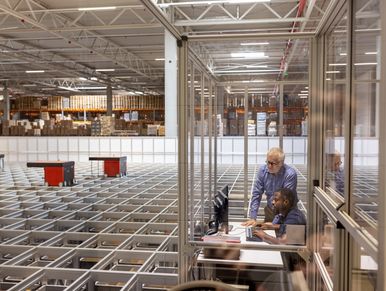
After years of growth, the 20-year-old logistics network for this company no longer aligned with customer delivery expectations or cost-to-serve requirements. A thorough analysis of customer needs and service-partners was conducted to understand the evolving demands, which enabled process optimisation, enhanced operational capabilities, and identified automation opportunities. This analysis also informed adjustments to inventory logic and delivery service levels tailored to different customer segments. These insights led to a redesigned east-coast network and a modernised distribution footprint — ultimately reducing cost-to-serve, increasing capacity, improving DIFOT and customer satisfaction, while aligning with a value chain strategy that future-proofed the network for the next 20 years.
2. Reducing Waste, Cost & Process Complexity
Process Cycle-Time Reduction
Multi-Category Supplier & Contract Optimisation
Multi-Category Supplier & Contract Optimisation

Mining component rebuild turnaround times and the growing demand for the installed fleet were putting pressure on maintaining adequate levels of finished goods. This situation led the business to explore significant capital investment in additional components. Through process optimisation and value stream mapping, subcontract repair steps were identified as the primary constraint. This allowed the repair process to be divided into controlled work packages, supported by a supply chain management approach utilising KANBAN for subcontract flows. As a result, the end-to-end cycle time was reduced by 50%, improving fleet availability and preventing a multi-million-dollar increase in core inventory.
Multi-Category Supplier & Contract Optimisation
Multi-Category Supplier & Contract Optimisation
Multi-Category Supplier & Contract Optimisation
This organisation sought to identify opportunities for process optimisation to reduce operational costs across several major spend areas. Categories were segmented and analysed based on revenue and production influence, enabling a clear view of value drivers and sourcing priorities within their supply chain management framework. Supplier rationalisation, contract renegotiation, and re-alignment of specifications were undertaken, supported by defined KPIs, structured meeting frameworks, and an SRM model. These efforts improved commercial discipline and supplier performance, which in turn delivered meaningful cost reductions and strengthened long-term value capture across key categories as part of their value chain strategy.
Decision Governance & Process Assurance
Multi-Category Supplier & Contract Optimisation
Decision Governance & Process Assurance
The absence of an end-to-end decision process for bringing new models to market resulted in unclear viability assessments and inconsistent operational readiness for this business. To enhance process optimisation, the full process was mapped to identify critical decisions influencing product suitability, customer impact, lifecycle cost, and overall profitability. A structured stage-gate framework was established with defined RACIs, performance metrics, and policy controls - improving decision quality and cross-functional alignment. This approach ensured that new models entered the market with full commercial clarity, operational readiness, and lifecycle support, ultimately strengthening our supply chain management and value chain strategy.
3. Improving Daily Work, Standards & Team Effectiveness
Workplace Organisation & Flow Improvement (Visual Factory)
Daily Performance & Problem-Solving System (Visual Management)
Daily Performance & Problem-Solving System (Visual Management)
Disorganised work areas, inconsistent layouts, and unclear material flow were creating safety risks and constraining productivity, hindering effective process optimisation. To address these issues, standard site rules, 5S fundamentals, colour-coded storage, clear line-marking, and structured layout standards were introduced. These changes not only created organised and intuitive work environments but also enhanced supply chain management. By stabilising safety and workflow, we reduced waste, improved material flow, and ultimately lifted overall operational efficiency, aligning with our value chain strategy.
Daily Performance & Problem-Solving System (Visual Management)
Daily Performance & Problem-Solving System (Visual Management)
Daily Performance & Problem-Solving System (Visual Management)
The lack of daily performance control hindered process optimisation, as issues were often detected too late, limiting productivity and slowing response times. To enhance supply chain management, a structured daily management system was introduced, featuring tiered stand-ups, visual performance indicators, short-interval control, and clear escalation pathways. This improvement in operational discipline and real-time problem solving lifted throughput, reduced delays, and strengthened day-to-day execution, aligning with an effective value chain strategy.
Quality Improvement System
Daily Performance & Problem-Solving System (Visual Management)
Quality Improvement System
As business grew and operations chased sales demand, recurring defects and unresolved quality issues began to surface, negatively impacting process optimisation and increasing rework, costs, and customer dissatisfaction. To address these challenges, a structured quality improvement system was established, incorporating standard RCA methods, formal CAR processes, clear ownership, and defined closure requirements. This approach enhanced visibility and resolution of issues, which in turn reduced defects and rework, lowered warranty exposure, and strengthened customer confidence, ultimately supporting a more effective supply chain management and value chain strategy.
4. Improving End-to-End Flow, Capacity & Reliability
Inventory Optimisation & Service Level Design
Standard Operating Procedure (SOP) Development & Adoption
Inventory Optimisation & Service Level Design
High inventory levels and inconsistent service availability were increasing holding costs and creating customer frustration. A diagnostic of demand patterns, stocking logic, supplier lead times, and service-level expectations revealed critical mismatches and inefficiencies in our supply chain management. By focusing on process optimisation, supplier lead times were recalibrated within MRP, operational controls were strengthened, optimised inventory models were introduced, and roles and accountabilities were restructured to support execution. This comprehensive value chain strategy reduced working capital, improved availability for priority segments, and increased forecast accuracy to industry- and company-record levels.
Capex Planning for Operational Growth
Standard Operating Procedure (SOP) Development & Adoption
Inventory Optimisation & Service Level Design
Operational teams had many strong ideas for capability and efficiency improvements related to process optimisation, but struggled to present them in a way that gained commercial backing. A complete capital planning framework was created, including structured identification templates, cost–benefit modelling, Net Present Value (NPV) and Internal Rate of Return (IRR) analysis, along with depreciation and lifecycle-impact assessment. To enhance supply chain management, operational managers were trained to apply the framework, validate assumptions, sequence timing (supply, installation, change impacts), and track performance over time. This uplift created a disciplined, repeatable investment process - which in turn produced a coherent three-year capital plan aligned to operational needs and strengthened commercial confidence in decision making, ultimately supporting a robust value chain strategy.
Standard Operating Procedure (SOP) Development & Adoption
Standard Operating Procedure (SOP) Development & Adoption
Standard Operating Procedure (SOP) Development & Adoption
In decentralised operations with central oversight, methods of working had drifted over time, leading to variations in safety practices, commercial controls, and customer outcomes across sites. A structured SOP development program aimed at process optimisation identified high-risk processes, assessed existing procedures, and diagnosed where standards were missing or inconsistently applied. End-to-end SOPs were rebuilt with clear ownership, readiness criteria, and training pathways, supported by an adoption model to embed the standards into daily operations. This approach not only enhanced supply chain management by reducing variation but also improved service reliability and strengthened operational discipline throughout the value chain strategy.
5. Modernising Operating Models & Digital Workflows
Enterprise Strategy & Operating Model Governance
As the organisation matured, it became clear that a more structured approach was needed to clarify mid-year strategic priorities, align divisions, and support process optimisation within our supply chain management efforts. A redesigned operating rhythm clarified decision rights, improved the flow of information, and aligned SLT forums around the strategic agenda, enhancing our value chain strategy. This uplift in governance and execution cadence, from meeting structures to action tracking, created greater organisational focus, strengthened cross-functional alignment, and improved the delivery of strategic initiatives.
Digital Transformation & Operating Model Redesign (22 Systems)
A leading mining and construction OEM’s global digital transformation required deploying new digital capabilities and redesigned processes across 15 distribution centres operating at different levels of maturity. To enable consistent adoption and enhance process optimisation, end-to-end process mapping was completed to define the future operating state, clarifying cross-functional workflows, business roles, decision pathways, and reporting structures. Robust program delivery practices were established to coordinate changes across ERP, WMS, TMS, and MRP systems, which supported a cohesive, standardised operating model, improved fulfilment performance, and strengthened supply chain management. This approach ultimately enabled the accelerated delivery of the transformation program while aligning with a comprehensive value chain strategy.
Digital Workflow Integration & Process Automation
Digital Workflow Integration & Process Automation
Key workflows across the organisation were still manual or disconnected, leading to delays, rework, and inconsistent experiences for customers, suppliers, and internal teams. To enhance process optimisation, priority processes were mapped end-to-end to pinpoint where digital integration could eliminate handoffs, improve visibility, and standardise execution. Three core workflow streams were digitised - customer-integrated processes (service requests, updates, notifications), supplier-integrated processes (lead-time visibility, repair status, replenishment triggers), and internal operating processes (approvals, routing, fulfilment steps). These improvements not only streamlined supply chain management but also reduced administrative effort, improved turnaround times, and fostered a more predictable, connected operating environment that aligns with our overall value chain strategy.
6. Improving Customer Experience & Enterprise Effectiveness
Organisation-Wide Change Adoption & Readiness
Data Quality Improvement & Single-Source-of-Truth
Data Quality Improvement & Single-Source-of-Truth
Major system and process optimisation changes were not achieving expected benefits in supply chain management due to inconsistent adoption across teams. To enhance our value chain strategy, we assessed change readiness, capability gaps, and behavioural drivers, which led to the creation of a structured adoption plan, role-based training, and a frontline support model. This approach improved adoption rates, reduced resistance, and accelerated benefit realisation.
Data Quality Improvement & Single-Source-of-Truth
Data Quality Improvement & Single-Source-of-Truth
Data Quality Improvement & Single-Source-of-Truth
Fragmented data sources and inconsistent definitions were undermining reporting accuracy and decision-making in supply chain management. By identifying critical data elements, ownership gaps, and integration issues, we were able to implement process optimisation strategies. This led to the creation of a master data framework, quality controls, and governance standards, which in turn improved reporting reliability, reduced rework, and strengthened enterprise decision-making as part of our overall value chain strategy.
Customer Journey Mapping & Service Redesign
Data Quality Improvement & Single-Source-of-Truth
Customer Journey Mapping & Service Redesign
Customers were experiencing inconsistent service across channels, leading to complaints and inefficiencies in process optimisation. To address these issues, end-to-end customer journeys were mapped to identify friction points, digital gaps, and handover failures within the supply chain management framework. Redesigned service pathways, clearer ownership, and improved digital touchpoints were introduced, which in turn enhanced customer satisfaction, reduced operational effort, and supported a more effective value chain strategy, ultimately improving overall service consistency.